

How to measure the particle size distribution of high purity graphite powder accurately?
Jul 25, 2025
Leave a message
Accurately measuring the particle size distribution of high purity graphite powder is crucial for us as a high purity graphite powder supplier. It directly impacts the quality and performance of the products our customers use. In this blog, I'll share some practical methods and tips on how to achieve accurate measurements.
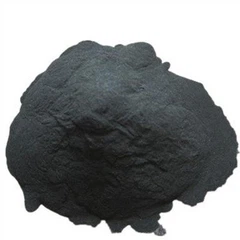
First off, let's understand why particle size distribution matters. Different applications of HP Graphite Powder require specific particle sizes. For example, in the battery industry, a precise particle size distribution can enhance the battery's performance and lifespan. If the particles are too large, they might not disperse well, leading to uneven reactions. On the other hand, if they're too small, it could cause issues like excessive surface area and higher reactivity.
One of the most common methods for measuring particle size distribution is laser diffraction. This technique works by shining a laser beam through a sample of graphite powder suspended in a liquid or gas. As the laser light encounters the particles, it scatters at different angles depending on the particle size. A detector then measures the intensity of the scattered light at various angles, and a computer algorithm uses this data to calculate the particle size distribution.
The advantage of laser diffraction is its speed and wide measurement range. It can measure particles from a few nanometers to several millimeters in size. However, it does have some limitations. For instance, it assumes that the particles are spherical, which might not be the case for graphite powder. Graphite particles can have irregular shapes, and this can introduce some errors in the measurement.
Another method is scanning electron microscopy (SEM). With SEM, we can take high - resolution images of the graphite particles. By analyzing these images using image analysis software, we can directly measure the size and shape of individual particles. This method is great for getting detailed information about the particle morphology. But it's a time - consuming process, and it can only analyze a relatively small number of particles, which might not be representative of the entire sample.
Dynamic light scattering (DLS) is also a useful technique, especially for measuring very fine particles. It measures the Brownian motion of particles in a liquid. The speed of this motion is related to the particle size. DLS is sensitive to small particles and can provide information about the average particle size and the polydispersity index. However, it's mainly suitable for particles in the nanometer to sub - micrometer range.
When preparing the sample for measurement, we need to be very careful. For laser diffraction and DLS, the graphite powder needs to be properly dispersed in a liquid medium. We usually use a surfactant to prevent the particles from agglomerating. Agglomeration can make the particles appear larger than they actually are, leading to inaccurate measurements.
We also need to ensure that the sample is homogeneous. A non - homogeneous sample can give inconsistent results. To achieve this, we can use techniques like sonication to break up any agglomerates and mix the sample thoroughly.
Calibration is another important aspect. We need to calibrate the measuring instruments regularly using standard reference materials. This helps to ensure that the measurements are accurate and reproducible. For example, when using a laser diffraction instrument, we use standard particles with known sizes to adjust the instrument's settings.
In addition to these measurement techniques, we also need to consider the environmental factors. Temperature and humidity can affect the particle size measurement. High humidity can cause the graphite powder to absorb moisture, which might change the particle size and the way they interact with each other. So, we should perform the measurements in a controlled environment.
As a supplier of Carbon Graphite Powder and UHP Graphite Powder, we are committed to providing high - quality products. Accurate particle size measurement is one of the key steps in ensuring the quality of our graphite powder.
We understand that different customers have different requirements for particle size distribution. Whether you're in the electronics industry, the automotive industry, or any other field that uses graphite powder, we can work with you to meet your specific needs. If you have any questions about the particle size measurement of our graphite powder or if you're interested in purchasing our products, please feel free to contact us. We're here to have in - depth discussions with you and provide you with the best solutions.
In conclusion, accurately measuring the particle size distribution of high purity graphite powder is a complex but essential task. By using a combination of different measurement techniques, proper sample preparation, calibration, and environmental control, we can obtain reliable and accurate results. This not only helps us maintain the quality of our products but also allows us to better serve our customers.
References


- ISO 13320:2009, Particle size analysis - Laser diffraction methods
- ISO 22412:2008, Particle size analysis - Dynamic light scattering (DLS)
- Goldstein, J. I., Newbury, D. E., Echlin, P., Joy, D. C., Fiori, C., & Lifshin, E. (2003). Scanning electron microscopy and X - ray microanalysis. Springer Science & Business Media.
Send Inquiry