

How to improve the wear resistance of a graphite block?
Oct 24, 2025
Leave a message
Graphite blocks are widely used in various industries due to their excellent properties such as high thermal conductivity, chemical stability, and electrical conductivity. However, one of the challenges faced when using graphite blocks is their relatively low wear resistance, which can limit their service life and performance in applications with high friction and abrasion. As a graphite block supplier, we understand the importance of improving the wear resistance of graphite blocks to meet the diverse needs of our customers. In this blog post, we will explore several effective ways to enhance the wear resistance of graphite blocks.
1. Material Selection
The first step in improving the wear resistance of a graphite block is to choose the right raw materials. High - quality graphite materials with a fine and uniform grain structure generally offer better wear resistance. For example, synthetic graphite can be a good choice as it often has a more controlled microstructure compared to natural graphite. Synthetic graphite can be engineered to have specific properties, such as a higher density and a more homogeneous distribution of carbon atoms, which can contribute to improved wear resistance.
When selecting graphite materials, it is also important to consider the purity of the graphite. Impurities in graphite can act as weak points and increase the likelihood of wear. High - purity graphite blocks are less prone to corrosion and abrasion, as there are fewer foreign substances that can react with the surrounding environment or cause local stress concentrations.
2. Surface Treatment
Surface treatment is an effective method to enhance the wear resistance of graphite blocks. One common surface treatment is the application of a protective coating. There are several types of coatings that can be used, such as ceramic coatings, metallic coatings, and polymer coatings.
Ceramic coatings, like silicon carbide (SiC) or aluminum oxide (Al₂O₃), are known for their high hardness and wear resistance. These coatings can form a hard and dense layer on the surface of the graphite block, acting as a barrier against abrasion. For example, SiC coatings can significantly reduce the friction coefficient between the graphite block and the contacting surface, thereby decreasing the wear rate.
Metallic coatings, such as nickel or chromium, can also improve the wear resistance of graphite blocks. These metals have good mechanical properties and can adhere well to the graphite surface. They can provide a tough and durable layer that protects the graphite from direct contact with abrasive particles.
Polymer coatings are another option. They can offer good chemical resistance and can also reduce friction. Some polymers can be designed to have self - lubricating properties, which is beneficial for reducing wear in applications where the graphite block is in sliding contact with other surfaces.


3. Heat Treatment
Heat treatment can modify the microstructure of graphite blocks and improve their wear resistance. By subjecting the graphite block to high - temperature heat treatment in a controlled environment, the carbon atoms can re - arrange themselves, resulting in a more stable and wear - resistant structure.
For example, graphitization heat treatment can increase the degree of graphitization of the graphite block. A higher degree of graphitization means that the graphite has a more ordered atomic structure, which can enhance its mechanical properties and wear resistance. During graphitization, the graphite is heated to a very high temperature (usually above 2500°C) in an inert atmosphere. This process can also remove some of the impurities in the graphite, further improving its purity and wear resistance.
4. Reinforcement
Adding reinforcements to the graphite matrix is a way to improve the wear resistance of graphite blocks. Reinforcements can be in the form of fibers or particles.
Carbon fibers are a popular choice for reinforcing graphite blocks. They have high strength and modulus, and when incorporated into the graphite matrix, they can enhance the overall mechanical properties of the block. Carbon fibers can act as load - bearing elements, distributing the stress more evenly and reducing the local stress concentration that can lead to wear.
Particulate reinforcements, such as silicon carbide particles or boron carbide particles, can also be added to the graphite. These particles are hard and can increase the hardness and wear resistance of the graphite block. They can also act as barriers to prevent the propagation of cracks and wear damage.
5. Design Optimization
The design of the graphite block can also have a significant impact on its wear resistance. In applications where the graphite block is in contact with other surfaces, the contact area and pressure distribution should be carefully considered.
A larger contact area can reduce the contact pressure per unit area, which can decrease the wear rate. For example, if the graphite block is used as a sliding bearing, a wider bearing surface can distribute the load more evenly and reduce the friction and wear.
The shape of the graphite block can also be optimized. For instance, rounded edges can reduce stress concentrations at the corners, which are often the areas where wear is more likely to occur. Additionally, the design can incorporate features such as grooves or channels, which can be used to store lubricants and improve the lubrication conditions, thereby reducing wear.
6. Lubrication
Proper lubrication is crucial for improving the wear resistance of graphite blocks. Lubricants can reduce the friction coefficient between the graphite block and the contacting surface, which in turn reduces the wear rate.
There are several types of lubricants that can be used with graphite blocks. Solid lubricants, such as graphite powder itself or molybdenum disulfide (MoS₂), can be used in dry or high - temperature applications. These solid lubricants can form a thin film on the surface of the graphite block, providing a low - friction interface.
Liquid lubricants, such as oils or greases, can also be used. They are suitable for applications where there is a need for continuous lubrication. However, it is important to choose a lubricant that is compatible with the graphite and the surrounding environment. Some lubricants may react with the graphite or cause swelling, which can affect the performance of the graphite block.
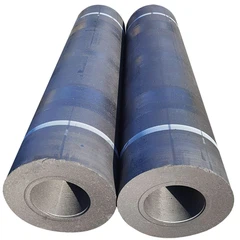
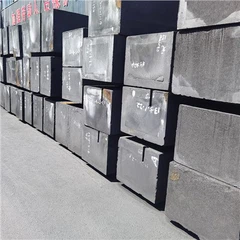
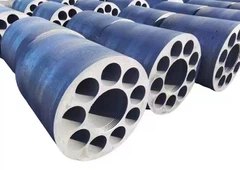
As a graphite block supplier, we offer a wide range of graphite products, including Graphite Electrode Squares, Irregular Graphite Block, and Graphite Electrode Blocks. Our products are manufactured with high - quality materials and advanced technologies to ensure excellent wear resistance.
If you are interested in our graphite blocks or have any questions about improving the wear resistance of graphite blocks, please feel free to contact us for procurement and further discussions. We are committed to providing you with the best solutions and high - quality products to meet your specific requirements.
References
- Fitzer, E., & Ebert, H. P. (1988). Carbon Fibers and Their Composites. Springer - Verlag.
- Powell, R. W. (1994). Carbon Materials for Advanced Technologies. Elsevier.
- Zhang, M., & Li, Y. (2010). Surface Engineering of Carbon Materials. Wiley - VCH.
Send Inquiry