

How does UHP Graphite Powder compare to other types of graphite powder?
Jun 03, 2025
Leave a message
Graphite powder is a versatile material with a wide range of applications, from lubricants and batteries to refractories and composites. Among the various types of graphite powder available in the market, Ultra-High Purity (UHP) Graphite Powder stands out for its exceptional properties. As a supplier of UHP Graphite Powder, I'm excited to delve into a detailed comparison between UHP Graphite Powder and other types, such as Carbon Graphite Powder and Graphite Oxide Powder.
Purity and Chemical Composition
UHP Graphite Powder is characterized by its extremely high purity levels, typically exceeding 99.9%. This high purity is achieved through advanced purification processes that remove impurities such as sulfur, iron, and other trace elements. The low impurity content makes UHP Graphite Powder ideal for applications where chemical purity is crucial, such as in the semiconductor industry and high-performance batteries.
In contrast, Carbon Graphite Powder generally has a lower purity level, often ranging from 95% to 99%. While it still offers good electrical and thermal conductivity, the presence of impurities can limit its performance in certain high - end applications. Carbon Graphite Powder is commonly used in applications where cost is a significant factor, such as in general - purpose lubricants and some types of refractories.
Graphite Oxide Powder has a unique chemical composition due to the presence of oxygen - containing functional groups on the graphite surface. These functional groups make it hydrophilic and can be chemically modified for various applications. However, the oxidation process also reduces the electrical conductivity compared to UHP and Carbon Graphite Powders. Graphite Oxide Powder is often used in applications such as energy storage devices, water treatment, and as a precursor for the synthesis of graphene.
Physical Properties
Particle Size and Morphology
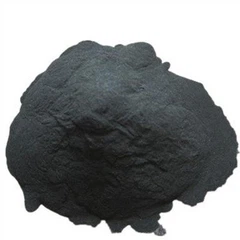
UHP Graphite Powder can be produced with a very fine and uniform particle size distribution. This fine particle size allows for better dispersion in matrices, which is beneficial for applications such as composite materials. The particles are usually spherical or near - spherical in shape, which helps in improving the flowability and packing density of the powder.
Carbon Graphite Powder may have a wider range of particle sizes, depending on the production method. It can be coarser than UHP Graphite Powder in some cases, which may affect its performance in applications where a high surface area or uniform dispersion is required. The particle morphology can also vary, with some particles being more irregular in shape.
Graphite Oxide Powder typically has a flake - like morphology. The flakes can be exfoliated to form single - or few - layer graphene oxide sheets. The large surface area of these flakes makes them suitable for applications such as adsorption and catalysis.
Electrical and Thermal Conductivity
UHP Graphite Powder exhibits excellent electrical and thermal conductivity due to its high purity and well - ordered graphite structure. It can be used in applications where efficient heat dissipation or electrical conduction is required, such as in electronic devices and heat sinks.
Carbon Graphite Powder also has good electrical and thermal conductivity, but the presence of impurities can slightly reduce these properties compared to UHP Graphite Powder. However, it is still sufficient for many industrial applications where high - end conductivity is not essential.
Graphite Oxide Powder has reduced electrical conductivity compared to the other two types due to the disruption of the graphite lattice by the oxygen - containing functional groups. Its thermal conductivity is also affected, but it can be improved through reduction processes to convert it back to a more graphitic structure.
Applications
UHP Graphite Powder
The high purity and excellent physical properties of UHP Graphite Powder make it suitable for a wide range of high - end applications. In the semiconductor industry, it is used as a crucible material for growing single - crystal silicon due to its high temperature resistance and low impurity content. In lithium - ion batteries, UHP Graphite Powder is used as an anode material to improve the battery's performance, including its capacity and cycle life. It is also used in the production of high - performance lubricants, where its fine particle size and high purity contribute to better lubrication and reduced wear. You can learn more about UHP Graphite Powder here.
Carbon Graphite Powder
Carbon Graphite Powder is widely used in the manufacturing of carbon brushes for electric motors. Its relatively low cost and good electrical conductivity make it a suitable choice for this application. It is also used in the production of refractory materials for lining furnaces and kilns. In the lubricant industry, carbon graphite powder is used in general - purpose lubricants for machinery and automotive applications. To explore Carbon Graphite Powder further, visit this link.


Graphite Oxide Powder
Graphite Oxide Powder has unique applications in the field of energy storage. It can be used as an electrode material in supercapacitors and lithium - sulfur batteries. In water treatment, its large surface area and functional groups allow it to adsorb heavy metals and organic pollutants. It is also a key precursor for the synthesis of graphene - based materials, which have potential applications in electronics, sensors, and composites. Find more information about Graphite Oxide Powder here.
Cost - Effectiveness
UHP Graphite Powder is generally more expensive than Carbon Graphite Powder due to the complex purification processes involved in its production. However, its high performance in critical applications often justifies the higher cost. For applications where the highest purity is not required, Carbon Graphite Powder offers a more cost - effective solution.
Graphite Oxide Powder's cost can vary depending on the production method and the degree of oxidation. While it may be more expensive than Carbon Graphite Powder in some cases, its unique properties and potential for further modification make it a valuable material for specific applications.
Environmental Impact
All three types of graphite powder have relatively low environmental impacts compared to some other industrial materials. UHP Graphite Powder, with its high purity, generates less waste and pollution during production. Carbon Graphite Powder, being widely used and relatively abundant, also has a relatively low environmental footprint.
Graphite Oxide Powder production involves chemical oxidation processes, which may generate some chemical waste. However, efforts are being made to develop more environmentally friendly production methods, such as using green oxidants.
Conclusion
In conclusion, UHP Graphite Powder offers superior performance in terms of purity, electrical and thermal conductivity, and particle size control compared to Carbon Graphite Powder and Graphite Oxide Powder. It is the preferred choice for high - end applications where performance is critical. Carbon Graphite Powder, on the other hand, provides a cost - effective solution for general - purpose applications. Graphite Oxide Powder has unique chemical and physical properties that make it suitable for specialized applications, especially in the fields of energy storage and water treatment.
As a supplier of UHP Graphite Powder, I understand the diverse needs of different industries. Whether you are looking for a high - performance material for your semiconductor manufacturing or a cost - effective solution for your lubricant production, we can provide the right product for you. If you are interested in purchasing UHP Graphite Powder or have any questions about our products, please feel free to contact us for a detailed discussion. We are committed to providing high - quality products and excellent customer service.
References
- Dresselhaus, M. S., Dresselhaus, G., & Eklund, P. C. (1996). Science of Fullerenes and Carbon Nanotubes. Academic Press.
- Niyogi, S., Hamon, M. A., Hu, H., Zhao, B., Bhowmik, P., Sen, R., & Itkis, M. E. (2002). Chemistry of Single - Walled Carbon Nanotubes. Accounts of Chemical Research, 35(12), 1105 - 1113.
- Stankovich, S., Dikin, D. A., Dommett, G. H. B., Kohlhaas, K. M., Zimney, E. J., Stach, E. A., ... & Ruoff, R. S. (2006). Graphene - Based Composite Materials. Nature, 442(7100), 282 - 286.
Send Inquiry