

How does RP Graphite Powder affect the electrical properties of conductive composites?
Jul 10, 2025
Leave a message
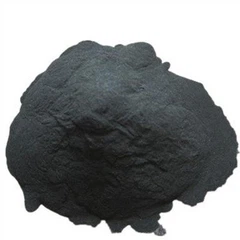
In the realm of materials science, conductive composites have emerged as a cornerstone for various technological applications, ranging from electronics to energy storage. Among the numerous fillers used to enhance the electrical conductivity of these composites, RP Graphite Powder has gained significant attention. As a dedicated supplier of RP Graphite Powder, I am excited to delve into how this remarkable material affects the electrical properties of conductive composites.
Structure and Properties of RP Graphite Powder
RP Graphite Powder is characterized by its unique crystal structure. It consists of layers of carbon atoms arranged in a hexagonal lattice, where each carbon atom is covalently bonded to three neighboring carbon atoms within the layer. These layers are held together by weak van der Waals forces, allowing them to slide over one another easily. This structure endows RP Graphite Powder with several intrinsic properties that are crucial for its role in conductive composites.
One of the most notable properties is its high electrical conductivity. The delocalized electrons within the graphite layers can move freely, facilitating the flow of electric current. This conductivity is anisotropic, meaning it is higher within the planes of the carbon layers compared to the direction perpendicular to them. Additionally, RP Graphite Powder exhibits excellent thermal conductivity, chemical stability, and lubricity, which further enhance its suitability for use in conductive composites.
Mechanisms of Conductivity Enhancement
When RP Graphite Powder is incorporated into a polymer matrix to form a conductive composite, several mechanisms come into play to enhance the electrical conductivity of the material.
Percolation Theory
The percolation theory is a fundamental concept in understanding the conductivity of composite materials filled with conductive fillers. According to this theory, there exists a critical filler concentration, known as the percolation threshold, below which the composite behaves as an insulator, and above which a continuous conductive network is formed throughout the matrix.
In the case of RP Graphite Powder-filled composites, as the graphite powder content increases, the individual graphite particles gradually come into contact with each other, forming conductive pathways. Once the percolation threshold is reached, electrons can flow freely through these pathways, resulting in a significant increase in the electrical conductivity of the composite. The percolation threshold depends on various factors, such as the shape, size, and aspect ratio of the graphite particles, as well as the nature of the polymer matrix.
Tunnel Effect
Even when the graphite particles are not in direct contact with each other, electrons can still be transferred between adjacent particles through a quantum mechanical phenomenon known as the tunnel effect. The tunnel effect occurs when the distance between two conductive particles is small enough for electrons to overcome the energy barrier between them and “tunnel” through the insulating polymer matrix.
In RP Graphite Powder-filled composites, the tunnel effect can contribute to the conductivity of the material, especially at filler concentrations below the percolation threshold. The probability of electron tunneling depends on the distance between the particles, the energy barrier height, and the electron density of states at the particle surfaces.
Interfacial Effects
The interface between the RP Graphite Powder and the polymer matrix also plays an important role in determining the electrical properties of the composite. The interaction between the graphite particles and the polymer chains can affect the mobility of electrons and the formation of conductive pathways.
For example, strong interfacial adhesion between the graphite and the polymer can improve the dispersion of the filler in the matrix, leading to a more uniform distribution of conductive particles and a lower percolation threshold. On the other hand, weak interfacial adhesion may result in agglomeration of the graphite particles, which can reduce the conductivity of the composite.
Factors Affecting the Electrical Properties of Conductive Composites
Several factors can influence the electrical properties of conductive composites filled with RP Graphite Powder.
Filler Loading
As mentioned earlier, the filler loading is a crucial factor in determining the electrical conductivity of the composite. Generally, the electrical conductivity increases with increasing filler loading, reaching a maximum value at a certain filler concentration. Beyond this concentration, further increase in the filler loading may lead to a decrease in the conductivity due to agglomeration of the particles and a reduction in the mechanical properties of the composite.
Particle Size and Shape
The size and shape of the RP Graphite Powder particles can also have a significant impact on the electrical properties of the composite. Smaller particles have a larger surface area, which can enhance the interfacial interaction between the filler and the matrix and improve the dispersion of the particles. This can result in a lower percolation threshold and higher electrical conductivity.
In addition, particles with a high aspect ratio, such as graphite flakes or fibers, are more effective in forming conductive networks compared to spherical particles. The elongated shape of these particles allows them to connect with each other more easily, facilitating the flow of electrons through the composite.
Polymer Matrix
The choice of polymer matrix can also affect the electrical properties of the composite. Polymers with high polarity or high dielectric constant can enhance the interaction between the graphite particles and the matrix, leading to improved conductivity. On the other hand, polymers with low polarity or high viscosity may hinder the dispersion of the filler and reduce the conductivity of the composite.
Applications of RP Graphite Powder in Conductive Composites
The unique electrical properties of RP Graphite Powder-filled conductive composites make them suitable for a wide range of applications.
Electronics
In the electronics industry, conductive composites are used in various components, such as printed circuit boards, electromagnetic shielding materials, and antistatic packaging. RP Graphite Powder-filled composites can provide excellent electrical conductivity, thermal management, and mechanical strength, making them ideal for these applications.
Energy Storage
In the field of energy storage, conductive composites are used in batteries and supercapacitors to improve the performance of the electrodes. RP Graphite Powder can enhance the electrical conductivity of the electrode materials, leading to faster charge and discharge rates, higher energy density, and longer cycle life.
Aerospace and Automotive
In the aerospace and automotive industries, conductive composites are used for lightweight structural components, such as body panels and interior parts. RP Graphite Powder-filled composites can provide both electrical conductivity and mechanical strength, making them suitable for applications where weight reduction and electromagnetic shielding are required.
Conclusion
As a supplier of RP Graphite Powder, I have witnessed firsthand the remarkable impact that this material can have on the electrical properties of conductive composites. By understanding the mechanisms of conductivity enhancement and the factors that affect the electrical properties of these composites, we can optimize the formulation and processing conditions to achieve the desired performance.


If you are interested in exploring the potential of RP Graphite Powder for your conductive composite applications, I encourage you to reach out to me. We can discuss your specific requirements and work together to develop customized solutions that meet your needs. Whether you are looking for Graphite Oxide Powder, Synthetic Graphite Powder, or HP Graphite Powder, I am here to provide you with high-quality products and excellent technical support.
References
- Ashby, M. F., & Jones, D. R. H. (2005). Engineering Materials 1: An Introduction to Properties, Applications and Design. Butterworth-Heinemann.
- Chung, D. D. L. (2001). Electrically Conductive Polymers: Fundamentals and Applications. Marcel Dekker.
- Feller, J. F., & Gauthier, C. (1997). Polymers for Engineering Applications. Prentice Hall.
- Mark, J. E., & Erman, B. (1992). Science and Technology of Rubber. Academic Press.
- Nielsen, L. E., & Landel, R. F. (1994). Mechanical Properties of Polymers and Composites. Marcel Dekker.
Send Inquiry