

How does graphite powder react with oxygen?
Jun 24, 2025
Leave a message
Graphite powder, a versatile and widely - used material, has numerous applications across various industries. As a trusted graphite powder supplier, I often encounter questions about its properties and reactions. One of the most frequently asked questions is: How does graphite powder react with oxygen? In this blog, we'll explore the details of this reaction, its implications, and how it relates to the different types of graphite powder we offer.
The Basics of Graphite
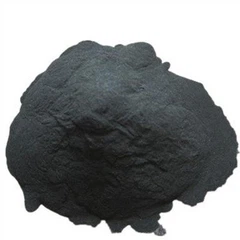
Graphite is a form of carbon, where carbon atoms are arranged in a hexagonal lattice structure. This unique structure gives graphite its characteristic properties such as high electrical conductivity, lubricity, and thermal stability. Our company offers a wide range of graphite powders, including UHP Graphite Powder, Synthetic Graphite Powder, and Superfine Graphite Powder, each with specific applications based on their purity, particle size, and other characteristics.


The Reaction of Graphite Powder with Oxygen
The reaction between graphite powder and oxygen is essentially a combustion reaction. When graphite is exposed to oxygen at high temperatures, it undergoes oxidation. The general chemical equation for this reaction is:
$C (graphite)+O_{2}(g)\rightarrow CO_{2}(g)$
This equation shows that when graphite (carbon) reacts with oxygen gas, carbon dioxide gas is produced. However, the reaction can be more complex in reality and may involve the formation of carbon monoxide ($CO$) under certain conditions.
$2C (graphite)+O_{2}(g)\rightarrow 2CO(g)$
The formation of carbon monoxide usually occurs when there is a limited supply of oxygen. In a well - ventilated environment with an excess of oxygen, the complete combustion to carbon dioxide is more likely to happen.
Factors Affecting the Reaction
Several factors can influence how graphite powder reacts with oxygen:
Temperature
Temperature plays a crucial role in the reaction rate. At room temperature, graphite is relatively stable and does not react with oxygen at a significant rate. However, as the temperature increases, the reaction becomes more likely to occur. The ignition temperature of graphite can vary depending on its purity, particle size, and other factors. For high - purity graphite, the ignition temperature can be as high as 700 - 800°C. As the temperature rises above the ignition point, the reaction proceeds rapidly, and the graphite burns.
Particle Size
The particle size of the graphite powder also affects the reaction. Finer graphite powders have a larger surface area per unit mass compared to coarser powders. A larger surface area means more contact between the graphite particles and oxygen molecules, which can increase the reaction rate. Our Superfine Graphite Powder is more reactive with oxygen due to its small particle size and high surface - to - volume ratio.
Purity
The purity of the graphite powder can influence the reaction. Impurities in graphite can act as catalysts or change the physical properties of the graphite, affecting its reactivity. For example, some metal impurities may lower the ignition temperature of graphite, making it more reactive with oxygen. Our UHP Graphite Powder has a very high purity, which generally makes it more stable and less likely to react with oxygen at lower temperatures compared to graphite with more impurities.
Oxygen Concentration
As mentioned earlier, the concentration of oxygen in the environment affects the products of the reaction. In an environment with a high oxygen concentration, the complete combustion to carbon dioxide is favored. In contrast, a low - oxygen environment promotes the formation of carbon monoxide.
Implications of the Reaction
The reaction of graphite powder with oxygen has several implications in different industries:
Metallurgy
In the metallurgical industry, graphite is often used as a reducing agent and a lining material in furnaces. When graphite reacts with oxygen during the smelting process, it can affect the quality of the metal being produced. For example, the formation of carbon monoxide can react with metal oxides, reducing them to the corresponding metals. On the other hand, the combustion of graphite can also cause damage to the furnace lining over time.
Battery Applications
Graphite is a key material in lithium - ion batteries. Although the reaction with oxygen is not typically a concern during normal battery operation, in cases of overheating or battery abuse, the graphite anode may react with oxygen, leading to thermal runaway and potentially causing safety issues such as fires or explosions.
Aerospace and High - Temperature Applications
In aerospace and other high - temperature applications, graphite components are exposed to high - temperature environments where oxygen may be present. Understanding the reaction of graphite with oxygen is crucial for designing components that can withstand these conditions without significant degradation.
Safety Considerations
When handling graphite powder, especially in environments where it may come into contact with oxygen at high temperatures, safety precautions are essential. Workers should wear appropriate personal protective equipment (PPE) such as gloves, goggles, and respirators. In addition, proper ventilation systems should be in place to prevent the accumulation of carbon monoxide and carbon dioxide gases, which can be harmful to human health.
Conclusion
The reaction of graphite powder with oxygen is a complex yet important phenomenon. As a graphite powder supplier, we understand the significance of these reactions in various industries. Our range of graphite powders, including UHP Graphite Powder, Synthetic Graphite Powder, and Superfine Graphite Powder, are carefully produced to meet the specific needs of different applications.
If you are interested in purchasing high - quality graphite powder for your projects, we invite you to contact us for further discussions. Our team of experts is ready to assist you in selecting the most suitable graphite powder based on your requirements.
References
- Atkins, P., & de Paula, J. (2006). Physical Chemistry. Oxford University Press.
- Housecroft, C. E., & Sharpe, A. G. (2008). Inorganic Chemistry. Pearson Education.
- Smook, G. A. (2016). Handbook for Pulp & Paper Technologists. Angus Wilde Publications.
Send Inquiry