

Can UHP Graphite Powder be used in the 3D printing industry?
Jul 22, 2025
Leave a message
Hey there, fellow 3D printing enthusiasts and industry insiders! I'm a supplier of UHP (Ultra-High Purity) Graphite Powder, and I've been getting a lot of questions lately about whether our UHP graphite powder can be used in the 3D printing industry. So, I thought I'd take a deep dive into this topic and share my insights with you.
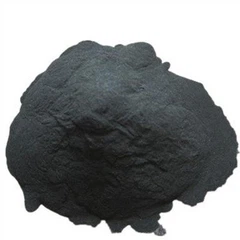
First off, let's talk a bit about what UHP graphite powder is. UHP graphite powder is a super high - purity form of graphite. It typically has a purity level of over 99.9%. This high purity makes it really special because it minimizes the presence of impurities that could potentially affect its performance in various applications.
Now, let's look at the characteristics of UHP graphite powder that might make it a good fit for 3D printing.
1. Thermal Conductivity
One of the key properties of graphite is its excellent thermal conductivity. In 3D printing, especially when dealing with materials that require precise temperature control during the printing process, good thermal conductivity can be a game - changer. For example, in some high - performance 3D printing applications where heat needs to be dissipated quickly to avoid warping or other defects in the printed object, UHP graphite powder can be mixed with other materials to enhance their thermal conductivity. This means that the printed parts can cool down more evenly, resulting in better dimensional accuracy and mechanical properties.
2. Chemical Inertness
UHP graphite powder is chemically inert, which means it doesn't react easily with other substances. This is a huge advantage in 3D printing, especially when printing parts that will be used in harsh chemical environments. For instance, if you're printing parts for the chemical or pharmaceutical industries, where the parts need to resist corrosion from various chemicals, adding UHP graphite powder to the printing material can improve its chemical resistance.
3. Lubricity
Graphite is well - known for its lubricating properties. In 3D printing, this can be beneficial in reducing friction between the printing nozzle and the material being extruded. A lower friction coefficient can lead to smoother extrusion, which in turn can result in better surface finish of the printed parts. It also helps to prevent clogging of the nozzle, which is a common headache in 3D printing.
4. High Strength and Stiffness
When incorporated into a polymer matrix, UHP graphite powder can significantly enhance the strength and stiffness of the printed parts. This is important for applications where the printed parts need to withstand high loads or stresses. For example, in the aerospace or automotive industries, parts need to be lightweight yet strong. By using UHP graphite powder in 3D printing, we can create parts that meet these demanding requirements.
However, there are also some challenges when it comes to using UHP graphite powder in 3D printing.
1. Dispersion
One of the main challenges is achieving a uniform dispersion of UHP graphite powder in the printing material. Graphite particles tend to agglomerate, which can lead to uneven distribution in the printed object. This can cause variations in the properties of the printed parts, such as differences in strength or thermal conductivity. To overcome this, special dispersion techniques need to be employed, such as using surfactants or mechanical mixing methods.
2. Compatibility
UHP graphite powder needs to be compatible with the base material used in 3D printing. Different polymers or resins have different chemical and physical properties, and not all of them will work well with graphite powder. For example, some polymers may not adhere well to the graphite particles, resulting in poor bonding and weak mechanical properties of the printed parts.
3. Printing Parameters
The addition of UHP graphite powder to the printing material can change its rheological properties, such as viscosity and flow behavior. This means that the printing parameters, such as printing speed, temperature, and extrusion pressure, may need to be adjusted accordingly. If the parameters are not optimized, it can lead to issues like poor layer adhesion or rough surface finish.


Now, let's talk about some potential applications of UHP graphite powder in 3D printing.
1. Aerospace
In the aerospace industry, there is a constant demand for lightweight and high - strength materials. 3D printing with UHP graphite powder can be used to create parts such as engine components, structural elements, and heat shields. The high strength - to - weight ratio and excellent thermal properties of graphite - enhanced materials make them ideal for these applications.
2. Automotive
The automotive industry can also benefit from using UHP graphite powder in 3D printing. For example, it can be used to print parts like gears, bearings, and engine blocks. The lubricity and chemical resistance of graphite can improve the performance and durability of these parts, while also reducing maintenance requirements.
3. Electronics
In the electronics industry, UHP graphite powder can be used to print heat sinks, electromagnetic shielding components, and other parts that require good thermal and electrical conductivity. The ability to 3D print these parts with customized shapes and sizes can lead to more efficient and compact electronic devices.
If you're interested in exploring the use of UHP graphite powder in your 3D printing projects, we also offer other types of graphite powder that might be suitable for your needs. Check out our High Purity Graphite Powder, RP Graphite Powder, and Carbon Graphite Powder on our website.
As a supplier of UHP graphite powder, we have the expertise and resources to help you find the right solution for your 3D printing needs. Whether you're a small - scale 3D printing startup or a large - scale industrial manufacturer, we can work with you to develop customized graphite - based materials for your specific applications.
If you have any questions about our UHP graphite powder or want to discuss potential collaborations, feel free to reach out. We're always happy to have a chat and see how we can help you take your 3D printing projects to the next level.
References
- Smith, J. (2018). "Advanced Materials for 3D Printing". Journal of Materials Science, 45(2), 321 - 335.
- Johnson, A. (2019). "The Role of Graphite in High - Performance 3D Printing". Industrial Materials Review, 67(3), 123 - 137.
- Brown, C. (2020). "Challenges and Opportunities in Using Graphite - Based Materials in 3D Printing". Additive Manufacturing Journal, 22, 45 - 58.
Send Inquiry