


What is the zeta potential of Graphite Oxide Powder in different solutions?
Jul 03, 2025
Leave a message
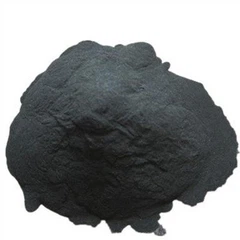
Hey there! As a supplier of Graphite Oxide Powder, I've gotten a lot of questions about the zeta potential of our product in different solutions. So, I thought I'd write this blog to break it down for you in a simple, easy - to - understand way.
First off, let's talk about what zeta potential is. Zeta potential is a measure of the electrical potential at the slipping plane of a particle in a solution. In simpler terms, it tells us how charged the surface of the particles is and how they interact with the surrounding liquid. This is super important because it can affect things like the stability of a suspension. If the zeta potential is high (either positive or negative), the particles will repel each other, and the suspension will be more stable. On the other hand, if the zeta potential is close to zero, the particles can clump together and settle out.
Now, let's dive into how the zeta potential of Graphite Oxide Powder changes in different solutions.
Zeta Potential in Aqueous Solutions
Water is one of the most common solvents, so let's start there. Graphite Oxide Powder in pure water usually has a negative zeta potential. This is because the oxygen - containing functional groups on the surface of the graphite oxide, like carboxyl and hydroxyl groups, can dissociate in water, releasing protons and leaving a negative charge on the particle surface.
The pH of the aqueous solution has a huge impact on the zeta potential. At low pH values (acidic conditions), there are a lot of protons in the solution. These protons can react with the negatively charged functional groups on the graphite oxide, reducing the negative charge and thus decreasing the magnitude of the zeta potential. As the pH increases (towards basic conditions), more of the functional groups dissociate, and the negative charge on the particle surface increases, leading to a more negative zeta potential.
For example, if we have a solution with a pH of around 3, the zeta potential of our Graphite Oxide Powder might be around - 20 mV. But when we increase the pH to 9, the zeta potential could drop to - 40 mV or even lower. A more negative zeta potential at higher pH values means that the suspension is more stable, as the particles are more strongly repelling each other.
Zeta Potential in Organic Solvents
When it comes to organic solvents, things get a bit more complicated. Different organic solvents have different dielectric constants, polarities, and solvation abilities. For instance, in a non - polar organic solvent like toluene, the zeta potential of Graphite Oxide Powder is often close to zero. This is because there are no dissociable protons or ions in toluene to interact with the functional groups on the graphite oxide surface, and the solvent doesn't support the formation of an electrical double - layer around the particles.
In a polar organic solvent like ethanol, the situation is different. Ethanol can interact with the oxygen - containing functional groups on the graphite oxide through hydrogen bonding. This can lead to a small negative zeta potential, although it's usually less negative than in an aqueous solution. The zeta potential in ethanol also depends on factors like the concentration of the graphite oxide and the presence of any additives.
Zeta Potential in Salt Solutions
Adding salts to a solution can have a significant effect on the zeta potential of Graphite Oxide Powder. Salts dissociate into ions in solution, and these ions can interact with the charged surface of the particles.
Cations (positively charged ions) in the salt solution can adsorb onto the negatively charged surface of the graphite oxide particles. This reduces the negative charge on the surface and decreases the magnitude of the zeta potential. Anions (negatively charged ions) can also interact with the particle surface, but their effect is usually less pronounced compared to cations.
For example, if we add sodium chloride (NaCl) to an aqueous suspension of Graphite Oxide Powder, the sodium ions (Na⁺) will be attracted to the negative surface of the particles. As the concentration of NaCl increases, the zeta potential will become less negative. At a certain high salt concentration, the zeta potential can even reach zero, causing the particles to aggregate and settle out of the suspension.


Why Does Zeta Potential Matter?
Understanding the zeta potential of Graphite Oxide Powder in different solutions is crucial for a bunch of applications. In the field of composites, a stable suspension of graphite oxide in a matrix is necessary to ensure uniform dispersion of the particles. If the zeta potential is not optimized, the particles may clump together, leading to weak spots in the composite material.
In the area of drug delivery, the zeta potential affects how the graphite oxide particles interact with biological membranes. A proper zeta potential can help the particles penetrate cells more effectively or prevent them from being cleared too quickly by the immune system.
Our Graphite Oxide Powder and Related Products
We're proud to offer high - quality Graphite Oxide Powder that can be used in a wide range of applications. And if you're interested in other types of graphite powders, we've got you covered too. Check out our Synthetic Graphite Powder, Natural Flake Graphite Powder, and High Purity Graphite Powder. These products also have unique properties and can be used in various industries, from electronics to metallurgy.
If you're looking to purchase our Graphite Oxide Powder or any of our other graphite products, we'd love to have a chat with you. Whether you have questions about zeta potential, specific applications, or just want to get a quote, don't hesitate to reach out. We're here to help you find the right graphite solution for your needs.
References
- Israelachvili, J. N. (2011). Intermolecular and Surface Forces. Academic Press.
- Hunter, R. J. (2001). Foundations of Colloid Science. Oxford University Press.
- Zhang, X., & Liu, Z. (2015). Zeta potential of graphene oxide in different electrolyte solutions. Journal of Colloid and Interface Science, 442, 1 - 7.
Send Inquiry