

What is the thermal conductivity of synthetic graphite powder?
Dec 22, 2025
Leave a message
In the ever - evolving landscape of materials science, synthetic graphite powder has emerged as a remarkable substance with a wide range of applications. A key property that often determines its suitability for various uses is thermal conductivity. As a leading supplier of synthetic graphite powder, I am excited to delve into the details of what thermal conductivity is, how it relates to synthetic graphite powder, and why it matters in different industries.
Understanding Thermal Conductivity
Thermal conductivity is a physical property that measures a material's ability to conduct heat. It is defined as the quantity of heat, in joules, that passes through a unit area (in square meters) of a material in a unit time (in seconds), when a temperature gradient of one kelvin per unit length (in meters) exists perpendicular to the area. The SI unit for thermal conductivity is watts per meter - kelvin (W/m·K).


Materials with high thermal conductivity are excellent heat conductors, meaning they can transfer heat quickly from a hot region to a cold region. Metals like copper and aluminum are well - known for their high thermal conductivity, which is why they are commonly used in heat sinks and other heat - transfer applications. On the other hand, materials with low thermal conductivity, such as wood or plastic, are good insulators, as they resist the flow of heat.
Thermal Conductivity of Synthetic Graphite Powder
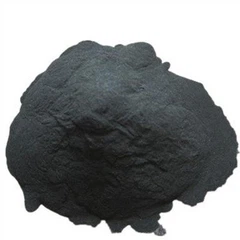
Synthetic graphite powder is a man - made form of graphite, which is an allotrope of carbon. It is produced through a series of high - temperature and chemical processes, resulting in a material with unique properties. One of the most notable characteristics of synthetic graphite powder is its relatively high thermal conductivity.
The thermal conductivity of synthetic graphite powder can vary depending on several factors, including its purity, particle size, crystal structure, and the manufacturing process. In general, high - quality synthetic graphite powder can have a thermal conductivity ranging from approximately 100 to 1000 W/m·K. This is quite impressive when compared to other common materials. For example, the thermal conductivity of air is about 0.026 W/m·K, while that of glass is around 1 W/m·K.
The high thermal conductivity of synthetic graphite powder is due to its unique crystal structure. Graphite consists of layers of carbon atoms arranged in a hexagonal lattice. In each layer, the carbon atoms are covalently bonded to three other carbon atoms, forming a strong and stable structure. The delocalized electrons within these layers can move freely, which allows for efficient heat transfer. When a temperature difference is applied across the graphite powder, the kinetic energy of the vibrating carbon atoms is quickly transferred through the structure, facilitated by the mobile electrons.
Factors Affecting the Thermal Conductivity of Synthetic Graphite Powder
Purity
Purity plays a crucial role in determining the thermal conductivity of synthetic graphite powder. Impurities in the powder can disrupt the crystal structure and scatter the phonons (quantized vibrational energy packets) that are responsible for heat transfer. Higher - purity synthetic graphite powder typically has fewer defects and a more ordered crystal structure, which allows for better heat conduction. As a supplier, we offer High Purity Graphite Powder that is engineered to minimize impurities and maximize thermal performance.
Particle Size
The particle size of synthetic graphite powder can also influence its thermal conductivity. Smaller particles generally have a larger surface area - to - volume ratio, which can enhance the contact between particles and improve heat transfer. However, if the particles are too small, they may also introduce more interfaces and scattering sites, which can reduce the overall thermal conductivity. Therefore, an optimal particle size needs to be selected based on the specific application requirements. Our company has extensive experience in controlling the particle size of our synthetic graphite powder to meet the diverse needs of our customers.
Crystal Structure
The crystal structure of synthetic graphite powder is another important factor. Highly ordered graphite crystals with a large degree of graphitization tend to have higher thermal conductivity. The manufacturing process can significantly affect the crystal structure. By carefully controlling the temperature, pressure, and chemical environment during production, we can produce synthetic graphite powder with a well - developed crystal structure, resulting in excellent thermal properties.
Applications of Synthetic Graphite Powder Based on Its Thermal Conductivity
Electronics
In the electronics industry, the demand for efficient heat dissipation is constantly increasing as electronic devices become more powerful and compact. Synthetic graphite powder is widely used in thermal interface materials (TIMs), which are placed between a heat - generating component (such as a CPU or GPU) and a heat sink. The high thermal conductivity of the powder allows for effective heat transfer from the component to the heat sink, preventing overheating and ensuring the stable operation of the device.
Energy Storage
In energy storage systems, such as lithium - ion batteries, heat management is crucial for battery performance and safety. Synthetic graphite powder can be incorporated into battery electrodes or used as a thermal management material. Its high thermal conductivity helps to distribute heat evenly within the battery, reducing the risk of hot spots and improving the overall efficiency and lifespan of the battery.
Aerospace
The aerospace industry requires materials that can withstand extreme temperatures and provide efficient heat transfer. Synthetic graphite powder is used in various aerospace applications, including thermal protection systems, heat exchangers, and electronic components. Its lightweight nature, combined with high thermal conductivity, makes it an ideal choice for these demanding applications.
Why Choose Our Synthetic Graphite Powder
As a trusted supplier of synthetic graphite powder, we are committed to providing high - quality products with excellent thermal conductivity. Our manufacturing process is carefully optimized to ensure the purity, particle size, and crystal structure of the powder meet the highest standards. We offer a wide range of Artificial Graphite Powder and Carbon Graphite Powder products to meet the diverse needs of our customers in different industries.
Our team of experts is always available to provide technical support and advice on the selection and application of our products. Whether you are working on a small - scale research project or a large - scale industrial application, we can help you find the right synthetic graphite powder solution for your specific requirements.
Conclusion
The thermal conductivity of synthetic graphite powder is a critical property that makes it a valuable material in many industries. Its ability to conduct heat efficiently, combined with other desirable characteristics such as chemical stability, electrical conductivity, and lightweight nature, makes it an ideal choice for a wide range of applications. As a supplier, we are dedicated to providing high - quality synthetic graphite powder that meets the strictest requirements of our customers.
If you are interested in learning more about our synthetic graphite powder products or have any questions regarding their thermal conductivity and applications, we encourage you to contact us. We look forward to discussing your needs and exploring how our products can contribute to the success of your projects.
References
- Touloukian, Y. S., & Ho, C. Y. (Eds.). (1970). Thermal conductivity: Nonmetallic solids. Plenum Press.
- Ziman, J. M. (1960). Electrons and phonons: The theory of transport phenomena in solids. Oxford University Press.
- Dresselhaus, M. S., Dresselhaus, G., & Eklund, P. C. (2000). Science of fullerenes and carbon nanotubes. Academic Press.
Send Inquiry