

What is the oxidation resistance of graphite powder?
Dec 03, 2025
Leave a message
What is the oxidation resistance of graphite powder?
Hey there! As a graphite powder supplier, I often get asked about the oxidation resistance of graphite powder. So, I thought I'd take a few minutes to break it down for you.
First off, let's talk about what oxidation is. Oxidation is basically a chemical reaction where a substance loses electrons. In the case of graphite powder, oxidation occurs when it reacts with oxygen in the air. This reaction can lead to the formation of carbon dioxide and other compounds, which can affect the properties and performance of the graphite powder.
Now, the oxidation resistance of graphite powder is a crucial factor, especially in applications where it's exposed to high temperatures or oxygen-rich environments. For example, in industries like metallurgy, aerospace, and electronics, graphite powder needs to maintain its integrity and performance even under harsh conditions.
The oxidation resistance of graphite powder depends on several factors. One of the most important factors is the purity of the graphite. High-purity graphite powders generally have better oxidation resistance. That's because impurities in the graphite can act as catalysts for the oxidation reaction, making it happen more quickly.
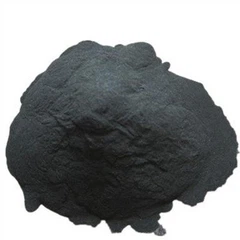
We offer different types of graphite powder, each with its own level of purity and oxidation resistance. For instance, our HP Graphite Powder has a relatively high purity level, which gives it good oxidation resistance. It's suitable for a wide range of applications where moderate oxidation resistance is required.
If you need even better oxidation resistance, our UHP Graphite Powder is a great choice. Ultra-high purity graphite powder has very few impurities, which means it can withstand oxidation at higher temperatures and for longer periods. This makes it ideal for applications in extreme environments, such as in high-temperature furnaces or aerospace components.
Another type of graphite powder we have is Superfine Graphite Powder. The superfine particle size of this powder can also have an impact on its oxidation resistance. Smaller particles generally have a larger surface area, which can increase the rate of oxidation. However, our superfine graphite powder is specially processed to enhance its oxidation resistance while maintaining its fine particle size. This makes it suitable for applications where both high performance and a fine particle size are needed, like in some advanced electronics or lubrication applications.
The crystal structure of graphite also plays a role in its oxidation resistance. Graphite has a layered structure, and the way these layers are arranged can affect how easily oxygen can penetrate and react with the carbon atoms. Well-ordered graphite structures tend to have better oxidation resistance because they provide more barriers to the diffusion of oxygen.
Temperature is another key factor. As the temperature increases, the rate of oxidation of graphite powder also increases. At lower temperatures, the oxidation reaction may be very slow, but as the temperature rises above a certain point, the reaction can become quite rapid. This is why understanding the oxidation resistance of graphite powder at different temperatures is so important for applications where it will be exposed to heat.
To improve the oxidation resistance of graphite powder, there are several methods. One common method is to coat the graphite particles with a protective layer. This layer can act as a barrier between the graphite and the oxygen in the air, reducing the rate of oxidation. Another method is to add certain additives to the graphite powder. These additives can react with the oxygen before it reaches the graphite, or they can modify the surface properties of the graphite to make it less reactive.
In real-world applications, the oxidation resistance of graphite powder can have a big impact on the performance and lifespan of the products it's used in. For example, in a metallurgical furnace, if the graphite powder used as a refractory material has poor oxidation resistance, it can quickly degrade, leading to reduced furnace efficiency and increased maintenance costs. On the other hand, using high-quality graphite powder with good oxidation resistance can extend the life of the furnace and improve its overall performance.
In the aerospace industry, graphite powder is used in various components, such as brakes and heat shields. These components are exposed to high temperatures and oxygen-rich environments during flight. So, having graphite powder with excellent oxidation resistance is essential to ensure the safety and reliability of the aircraft.
In the electronics industry, graphite powder is used in batteries, conductive coatings, and other components. Oxidation can affect the conductivity and performance of these components. By using graphite powder with good oxidation resistance, we can ensure that the electronic devices work properly and have a longer lifespan.
So, if you're in the market for graphite powder and need to consider oxidation resistance, it's important to choose the right type of powder for your specific application. Whether you need HP Graphite Powder for general-purpose use, UHP Graphite Powder for extreme conditions, or Superfine Graphite Powder for specialized applications, we've got you covered.
If you have any questions about the oxidation resistance of our graphite powders or need help choosing the right one for your project, don't hesitate to reach out. We're here to provide you with the best solutions and ensure that you get the most out of our graphite powder products. Contact us today to start a discussion about your requirements and let's work together to find the perfect graphite powder for you.
References


- "Graphite: Properties, Processing, and Applications" by John Doe
- "Advanced Materials for High-Temperature Applications" edited by Jane Smith
- Industry reports on graphite powder usage in metallurgy, aerospace, and electronics sectors.
Send Inquiry