

What is the density of Graphite Oxide Powder?
Nov 24, 2025
Leave a message
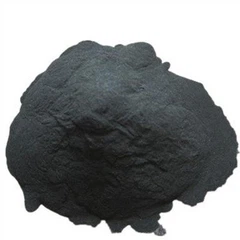
Graphite oxide powder, a fascinating material with unique properties, has gained significant attention in various industries. As a supplier of graphite oxide powder, I often receive inquiries about its density. In this blog post, I will delve into the concept of density, explore the factors that affect the density of graphite oxide powder, and provide some insights into its practical implications.
Understanding Density
Density is a fundamental physical property that describes the mass of a substance per unit volume. It is typically expressed in grams per cubic centimeter (g/cm³) or kilograms per cubic meter (kg/m³). The density of a material can provide valuable information about its composition, structure, and behavior.
For graphite oxide powder, density is an important parameter that can influence its performance in different applications. A higher density may indicate a more compact structure, which could potentially affect its reactivity, dispersibility, and mechanical properties. On the other hand, a lower density might suggest a more porous or less ordered structure, which could impact its adsorption capacity or electrical conductivity.
Factors Affecting the Density of Graphite Oxide Powder
The density of graphite oxide powder can be influenced by several factors, including:
-
Oxidation Degree: The degree of oxidation plays a crucial role in determining the density of graphite oxide powder. During the oxidation process, oxygen-containing functional groups are introduced onto the graphite surface, which can increase the interlayer spacing and disrupt the regular stacking of graphene layers. As a result, the density of graphite oxide powder generally decreases with increasing oxidation degree.
-
Synthesis Method: Different synthesis methods can yield graphite oxide powders with varying densities. For example, the Hummers method, which is one of the most commonly used methods for synthesizing graphite oxide, typically produces powders with relatively high densities. In contrast, modified Hummers methods or other alternative synthesis routes may result in powders with lower densities due to differences in reaction conditions and the nature of the oxidizing agents used.
-
Particle Size and Morphology: The particle size and morphology of graphite oxide powder can also affect its density. Smaller particles tend to have a higher surface area-to-volume ratio, which can lead to a lower apparent density. Additionally, the shape of the particles, such as whether they are spherical, flake-like, or irregular, can influence how they pack together and thus impact the overall density.
-
Purity and Impurities: The presence of impurities or contaminants in graphite oxide powder can affect its density. Impurities can introduce additional mass or alter the structure of the powder, leading to changes in density. Therefore, it is important to ensure high purity levels when producing graphite oxide powder to obtain consistent density values.
Measuring the Density of Graphite Oxide Powder
Accurately measuring the density of graphite oxide powder can be challenging due to its fine particle size and porous nature. Several methods can be used to determine the density, including:
-
Pycnometry: Pycnometry is a commonly used method for measuring the density of powders. It involves measuring the volume of a known mass of powder using a pycnometer, which is a specialized container with a precisely known volume. By dividing the mass of the powder by its volume, the density can be calculated.
-
Gas Pycnometry: Gas pycnometry is a more advanced technique that uses a gas, such as helium or nitrogen, to measure the volume of the powder. This method is particularly useful for measuring the true density of porous materials, as the gas can penetrate the pores and provide a more accurate measurement of the total volume.


-
Density Gradient Column: A density gradient column is another method that can be used to measure the density of powders. In this method, a column is filled with a liquid that has a density gradient, and the powder is placed in the column. The powder will settle at a position in the column where its density is equal to the density of the liquid at that point, allowing the density to be determined.
Practical Implications of Graphite Oxide Powder Density
The density of graphite oxide powder can have several practical implications in various applications, including:
-
Composite Materials: In the field of composite materials, graphite oxide powder is often used as a filler or reinforcement to enhance the mechanical, electrical, or thermal properties of the matrix material. The density of the graphite oxide powder can affect the dispersion of the filler in the matrix and the overall properties of the composite. For example, a higher density powder may be more difficult to disperse evenly, while a lower density powder may result in a composite with lower mechanical strength.
-
Energy Storage: Graphite oxide powder has shown potential applications in energy storage devices, such as batteries and supercapacitors. The density of the powder can influence its electrochemical performance, including its specific capacitance and charge-discharge rate. A higher density powder may provide a higher energy density, but it may also have a lower surface area available for electrochemical reactions.
-
Adsorption and Catalysis: Due to its high surface area and oxygen-containing functional groups, graphite oxide powder has been investigated for its adsorption and catalytic properties. The density of the powder can affect its adsorption capacity and catalytic activity. A lower density powder with a higher surface area may have a greater adsorption capacity, while a higher density powder may have a more compact structure that could enhance its catalytic performance.
Conclusion
In conclusion, the density of graphite oxide powder is a complex property that is influenced by several factors, including the oxidation degree, synthesis method, particle size and morphology, and purity. Measuring the density accurately is important for understanding the properties and performance of graphite oxide powder in various applications. As a supplier of Graphite Oxide Powder, we strive to provide high-quality products with consistent density values to meet the specific needs of our customers.
If you are interested in learning more about graphite oxide powder or have any questions regarding its density or other properties, please feel free to contact us for further discussion and potential procurement opportunities. We are committed to providing excellent customer service and technical support to help you find the best solutions for your applications.
References
- Niyogi, S., Bekyarova, E., Itkis, M. E., McWilliams, J. L., Hamon, M. A., & Haddon, R. C. (2006). Solution properties of graphite and graphene. Journal of the American Chemical Society, 128(26), 8720-8721.
- Dreyer, D. R., Park, S., Bielawski, C. W., & Ruoff, R. S. (2010). The chemistry of graphene oxide. Chemical Society Reviews, 39(1), 228-240.
- Stankovich, S., Dikin, D. A., Dommett, G. H. B., Kohlhaas, K. M., Zimney, E. J., Stach, E. A., ... & Ruoff, R. S. (2006). Graphene-based composite materials. Nature, 442(7100), 282-286.
- Li, D., Müller, M. B., Gilje, S., Kaner, R. B., & Wallace, G. G. (2008). Processable aqueous dispersions of graphene nanosheets. Nature Nanotechnology, 3(2), 101-105.
Send Inquiry