

How does the morphology of Graphite Oxide Powder affect its performance in various applications?
Aug 05, 2025
Leave a message
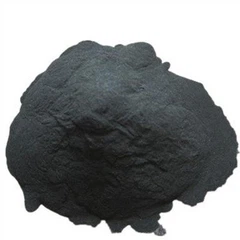
Graphite oxide powder (GOP) has emerged as a versatile material with a wide range of applications, from energy storage to water purification. As a leading supplier of GOP, we understand the critical role that its morphology plays in determining its performance across various applications. In this blog post, we will explore how the morphology of GOP affects its performance and why it matters for your specific needs.
Understanding the Morphology of Graphite Oxide Powder
The morphology of GOP refers to its physical structure, including its size, shape, and surface characteristics. These properties are influenced by the synthesis method and processing conditions, which can be tailored to achieve specific morphological features. For instance, the oxidation process can introduce oxygen-containing functional groups on the graphite surface, leading to changes in the interlayer spacing and surface area of the powder.
One of the key morphological features of GOP is its layer structure. Unlike pristine graphite, which consists of stacked graphene layers held together by weak van der Waals forces, GOP has a more disordered structure due to the presence of functional groups. These functional groups can disrupt the stacking of graphene layers, resulting in an expanded interlayer spacing. The degree of oxidation and the type of functional groups present can significantly affect the interlayer spacing, which in turn influences the accessibility of the internal surface area of the powder.
Another important morphological aspect is the particle size and shape. GOP can be synthesized in various particle sizes, ranging from nanometers to micrometers. The particle size can affect the dispersion behavior of the powder in solvents and the packing density in composite materials. Smaller particles generally have a higher surface area to volume ratio, which can enhance their reactivity and adsorption capacity. However, they may also be more prone to agglomeration, which can reduce their effectiveness in some applications.
Impact of Morphology on Performance in Energy Storage Applications
One of the most promising applications of GOP is in energy storage devices, such as lithium-ion batteries and supercapacitors. In these applications, the morphology of GOP can have a profound impact on the performance of the device.
Lithium-Ion Batteries
In lithium-ion batteries, GOP can be used as an anode material or as a component in the electrolyte. The interlayer spacing of GOP is crucial for the intercalation and deintercalation of lithium ions during the charging and discharging process. A larger interlayer spacing allows for faster diffusion of lithium ions, which can improve the battery's charge and discharge rates. Additionally, the high surface area of GOP can provide more active sites for lithium-ion storage, increasing the battery's capacity.
The particle size of GOP also plays a role in battery performance. Smaller particles can enhance the contact between the active material and the electrolyte, improving the lithium-ion transport kinetics. However, they may also increase the irreversible capacity loss due to the formation of a solid electrolyte interphase (SEI) layer on the particle surface. Therefore, optimizing the particle size and morphology of GOP is essential for achieving high-performance lithium-ion batteries.
Supercapacitors
In supercapacitors, GOP can be used as an electrode material due to its high surface area and electrical conductivity. The large surface area of GOP provides more sites for the adsorption and desorption of electrolyte ions, which is the basis for the energy storage mechanism in supercapacitors. The interlayer spacing of GOP can also affect the ion diffusion rate, with a larger spacing facilitating faster ion transport.
The morphology of GOP can also influence the mechanical stability of the supercapacitor electrodes. For example, a well-dispersed and interconnected network of GOP particles can provide better mechanical support, preventing the electrodes from cracking or delaminating during cycling. This can improve the long-term stability and performance of the supercapacitor.
Influence of Morphology on Performance in Water Purification
GOP has also shown great potential in water purification applications, such as the removal of heavy metals, organic pollutants, and microorganisms from water. The morphology of GOP can significantly affect its adsorption capacity and selectivity for different contaminants.
Adsorption of Heavy Metals
The high surface area and the presence of oxygen-containing functional groups on the surface of GOP make it an excellent adsorbent for heavy metals. The functional groups can act as chelating agents, binding to heavy metal ions through electrostatic interactions and complexation. The interlayer spacing of GOP can also play a role in the adsorption process, as it can provide additional space for the accommodation of heavy metal ions.
The particle size of GOP can affect the adsorption kinetics and capacity. Smaller particles have a higher surface area and can provide more active sites for adsorption, leading to faster adsorption rates. However, they may also be more difficult to separate from the water after adsorption. Therefore, a balance between particle size and adsorption performance needs to be considered in water purification applications.
Removal of Organic Pollutants
GOP can also adsorb organic pollutants from water through hydrophobic interactions and π-π stacking. The surface area and the degree of oxidation of GOP can influence its affinity for different types of organic pollutants. A higher surface area and a greater number of oxygen-containing functional groups can enhance the adsorption capacity for polar organic pollutants, while a more graphitic structure can be more effective for non-polar organic pollutants.
The morphology of GOP can also affect its photocatalytic activity, which can be used to degrade organic pollutants in water. For example, a porous and well-dispersed GOP structure can provide more active sites for the generation of reactive oxygen species, leading to more efficient degradation of organic pollutants under light irradiation.
Role of Morphology in Composite Materials
GOP is often used as a filler or reinforcement in composite materials to improve their mechanical, electrical, and thermal properties. The morphology of GOP can have a significant impact on the performance of the composite.
Mechanical Properties
In polymer composites, the addition of GOP can enhance the mechanical strength and stiffness of the material. The particle size and shape of GOP can affect the dispersion of the filler in the polymer matrix and the interfacial adhesion between the filler and the matrix. Smaller particles can provide better dispersion and a larger interfacial area, which can improve the stress transfer between the filler and the matrix, leading to enhanced mechanical properties.
The interlayer spacing of GOP can also influence the mechanical performance of the composite. A larger interlayer spacing can allow for better penetration of the polymer chains into the GOP layers, improving the interfacial adhesion and the overall mechanical properties of the composite.
Electrical and Thermal Properties
GOP can also improve the electrical and thermal conductivity of composite materials. The high surface area and the interconnected structure of GOP can provide a conductive pathway for electrons and heat transfer. The particle size and morphology of GOP can affect the formation of a conductive network in the composite. Smaller particles can form a more continuous network, leading to higher electrical and thermal conductivity.


Conclusion and Call to Action
In conclusion, the morphology of graphite oxide powder plays a crucial role in determining its performance in various applications, including energy storage, water purification, and composite materials. As a supplier of high-quality GOP, we offer a wide range of products with different morphological features to meet the specific needs of our customers. Whether you are looking for a GOP with a large interlayer spacing for energy storage applications or a well-dispersed powder for water purification, we can provide you with the right solution.
If you are interested in learning more about our graphite oxide powder products or discussing your specific application requirements, please feel free to contact us. We are committed to providing you with the best products and services to help you achieve your goals. You can also explore our other graphite powder products, such as Artificial Graphite Powder, HP Graphite Powder, and High Purity Graphite Powder.
References
- Li, X., & Dai, L. (2014). Graphene oxide: Preparation, functionalization, and electrochemical applications. Chemical Society Reviews, 43(10), 3522-3538.
- Nair, R. R., Blake, P., Grigorenko, A. N., Novoselov, K. S., Booth, T. J., Stauber, T., ... & Geim, A. K. (2008). Fine structure constant defines visual transparency of graphene. Science, 320(5881), 1308-1308.
- Stankovich, S., Dikin, D. A., Dommett, G. H. B., Kohlhaas, K. M., Zimney, E. J., Stach, E. A., ... & Ruoff, R. S. (2006). Graphene-based composite materials. Nature, 442(7100), 282-286.
Send Inquiry