

Does RP Graphite Powder have any optical properties?
Jul 21, 2025
Leave a message
Does RP Graphite Powder have any optical properties?
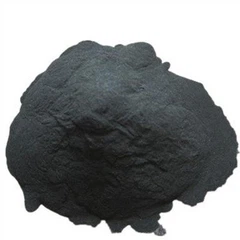
As a supplier of RP Graphite Powder, I've been constantly intrigued by the various properties of this remarkable material. One question that often comes up in discussions with clients and industry enthusiasts is whether RP Graphite Powder has any optical properties. In this blog post, we'll delve into the science behind RP Graphite Powder and explore its potential optical characteristics.


Understanding RP Graphite Powder
RP Graphite Powder, or Resin - Bonded Graphite Powder, is a type of graphite powder that is often used in a wide range of industrial applications. It is known for its excellent electrical conductivity, high thermal conductivity, and good mechanical properties. The powder is typically produced by mixing graphite with a resin binder, which helps to hold the graphite particles together and gives the material its unique properties.
Graphite itself is a form of carbon with a hexagonal crystal structure. The carbon atoms in graphite are arranged in layers, and these layers are held together by weak van der Waals forces. This structure gives graphite its characteristic properties, such as its lubricity and its ability to conduct electricity.
General Knowledge of Optical Properties in Materials
Optical properties of a material refer to how it interacts with light. Common optical properties include absorption, reflection, transmission, and emission. For example, metals are known for their high reflectivity, which is why they appear shiny. Transparent materials like glass allow light to pass through them, exhibiting high transmission. Semiconductors can absorb photons and generate electron - hole pairs, which is the basis for many optoelectronic devices.
Potential Optical Properties of RP Graphite Powder
-
Absorption
Graphite has a high absorption coefficient in the visible and infrared regions of the electromagnetic spectrum. This is due to the presence of delocalized electrons in its structure. When light interacts with graphite, the photons can be absorbed by these electrons, causing them to jump to higher energy levels. In the case of RP Graphite Powder, the resin binder may also have an impact on the absorption properties. The resin could either enhance or reduce the overall absorption depending on its chemical composition and thickness. For instance, if the resin has chromophores that can absorb certain wavelengths of light, it may add to the absorption spectrum of the RP Graphite Powder. -
Reflection
The reflectivity of RP Graphite Powder is likely to be influenced by the surface morphology of the powder particles and the presence of the resin binder. Graphite in bulk form has a relatively low reflectivity compared to metals. The rough surface of the powder particles may scatter light in multiple directions, reducing the specular reflection. The resin binder can also change the surface properties of the powder. If the resin forms a smooth coating on the graphite particles, it may increase the specular reflection to some extent. However, if the resin has a different refractive index from graphite, it may cause additional scattering and reduce the overall reflectivity. -
Transmission
Since RP Graphite Powder is a powder, it is not expected to have high transmission of light. The powder particles will scatter and absorb light, preventing it from passing through easily. However, in thin films or coatings made from RP Graphite Powder, some degree of transmission may be possible. The thickness of the film and the packing density of the powder particles will play crucial roles. A very thin film with well - dispersed particles may allow a small amount of light to pass through, especially in the infrared region where graphite has relatively lower absorption. -
Emission
Under certain conditions, RP Graphite Powder may exhibit emission properties. When the powder is heated or excited by an external energy source such as a laser, the electrons in the graphite can be excited to higher energy levels. As these electrons return to their ground states, they can emit photons. The emission spectrum will depend on the energy levels of the electrons in the graphite and the nature of the excitation. The resin binder may also affect the emission properties. For example, if the resin has fluorescent or phosphorescent groups, it can contribute to the overall emission of the RP Graphite Powder.
Applications Based on Optical Properties
- Optical Coatings
The absorption and reflection properties of RP Graphite Powder can be exploited in optical coatings. For example, in anti - reflective coatings, the powder can be used to absorb and scatter light, reducing the reflection from a surface. In heat - absorbing coatings, the high absorption of RP Graphite Powder in the infrared region can be used to absorb heat from sunlight, which is useful in solar thermal applications. - Optoelectronic Devices
Although RP Graphite Powder may not be as commonly used as traditional semiconductors in optoelectronic devices, its potential emission and absorption properties could be explored. For instance, in some types of photodetectors, the absorption of light by the powder can generate electron - hole pairs, which can be detected as an electrical signal.
Comparison with Other Graphite Powders
When comparing RP Graphite Powder with other types of graphite powders such as Artificial Graphite Powder and HP Graphite Powder, there are some differences in their optical properties. Artificial Graphite Powder is often produced through synthetic methods, which can result in a more uniform particle size and structure compared to RP Graphite Powder. This may lead to different absorption and reflection characteristics. HP Graphite Powder, which stands for High - Purity Graphite Powder, has a very high carbon content and fewer impurities. The high purity can affect its optical properties, for example, by reducing the absorption due to impurity - related absorption bands.
Conclusion
RP Graphite Powder does have some optical properties, including absorption, reflection, and potentially emission. These properties are influenced by the inherent properties of graphite as well as the presence of the resin binder. Understanding these optical properties can open up new applications in areas such as optical coatings and optoelectronic devices.
If you are interested in exploring the potential of RP Graphite Powder for your specific applications, or if you have any questions regarding its optical or other properties, please feel free to contact us. We are a leading supplier of RP Graphite Powder and can provide high - quality products tailored to your needs. Our team of experts is ready to assist you in finding the best solutions for your projects.
References
- Ashby, M. F., & Jones, D. R. H. (2012). Engineering Materials 1: An Introduction to Properties, Applications, and Design. Butterworth - Heinemann.
- Dresselhaus, M. S., Dresselhaus, G., & Eklund, P. C. (1996). Graphite Intercalation Compounds and Carbon Fibers. Springer - Verlag.
- Kittel, C. (2004). Introduction to Solid State Physics. Wiley.
Send Inquiry